
What is an ALIF?
Anterior lumbar interbody fusion (ALIF) is a technique for fusing the lumbar spine. The procedure is performed from the front of the body, unlike other lumbar spinal fusion techniques. In some ways, ALIF is analogous to an ACDF in the cervical spine.
Why might I need an ALIF?
An ALIF is used to treat degenerative spinal disorders, including lumbar stenosis, degenerative disc disease, spondylolisthesis, radiculopathy (leg pain), and back pain. ALIF is preferred in particular when fusing L5-S1.
How is an ALIF performed?
In an ALIF procedure, a short incision is made over the lower abdomen. A team of a general surgeon and a spine surgeon work together to access the diseased intervertebral disc. The disc is removed, and an implant is inserted, usually consisting of metal and bone graft. The goal of the procedure is to promote a bony fusion between the two adjacent vertebrae. By increasing disc space height and correcting spinal alignment, an ALIF procedure can also decompress the nerves traveling to the legs. Sometimes, screws are inserted through the back to provide additional fixation.
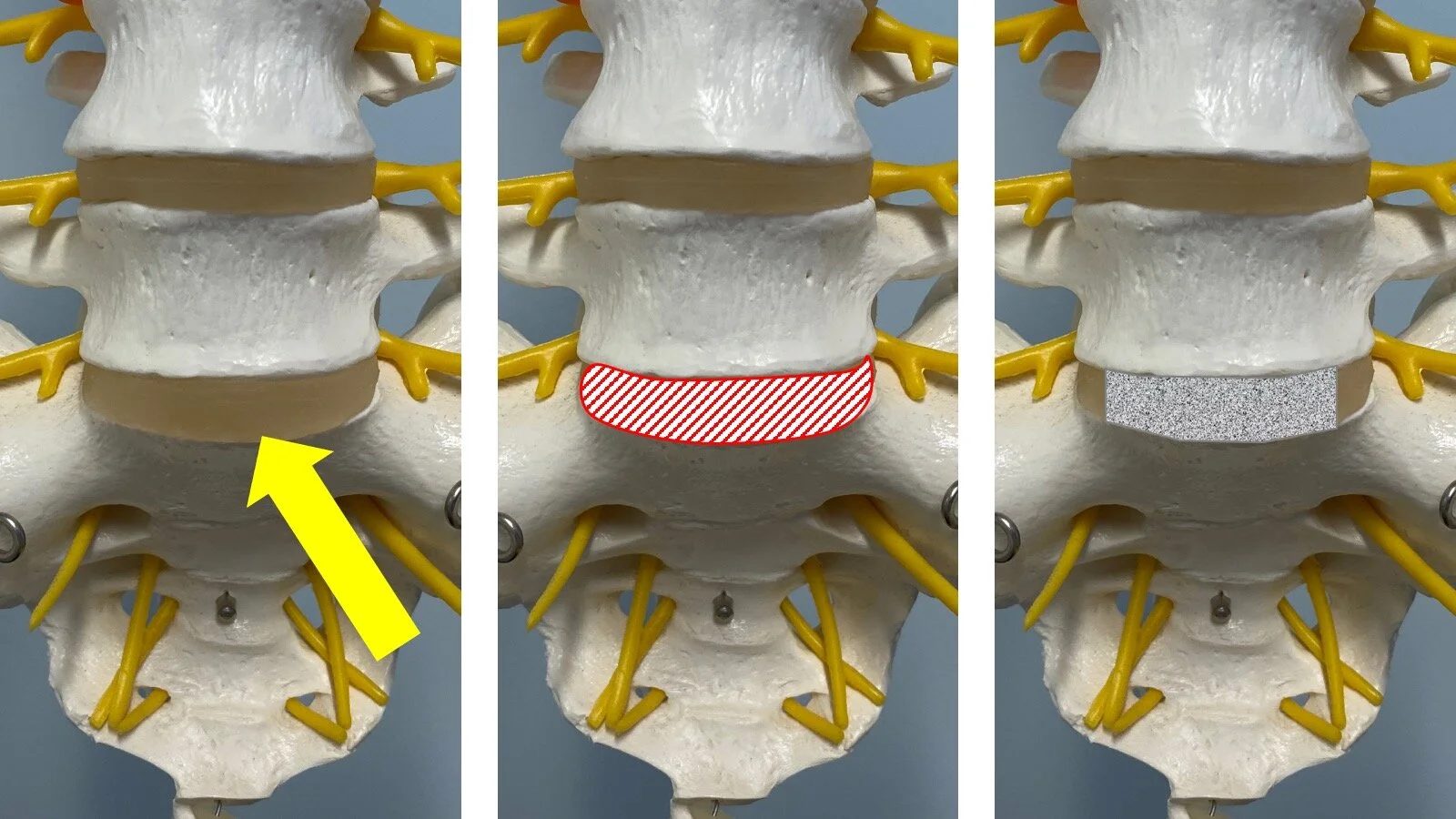
What are the advantages over other lumbar fusion techniques?
ALIF offers advantages over other lumbar fusion techniques, for example TLIF, in that a relatively large graft can be inserted into the disc space, which increases the rate of fusion. It also involves less muscle dissection, which reduces post-operative pain.
Examples of ALIF cases
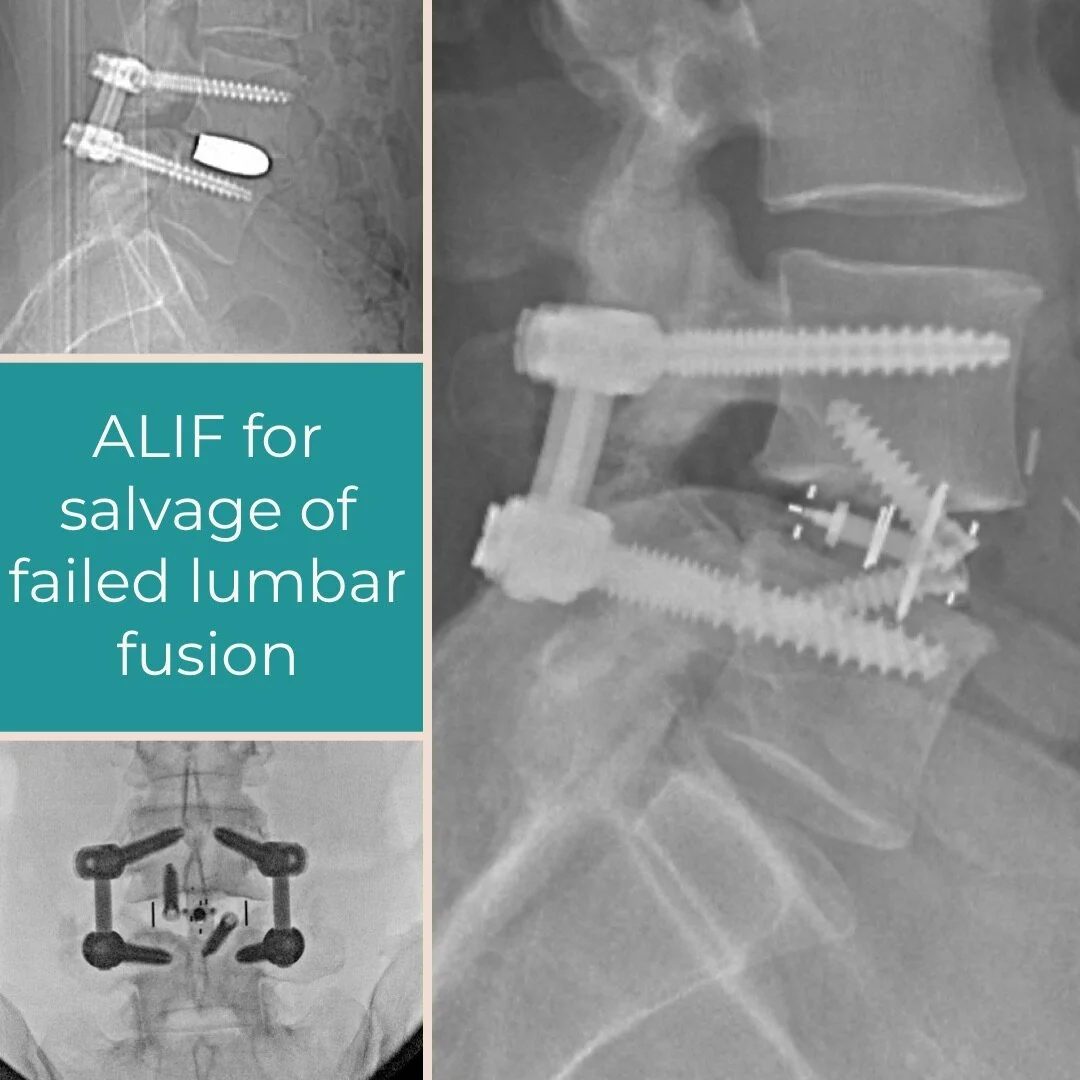
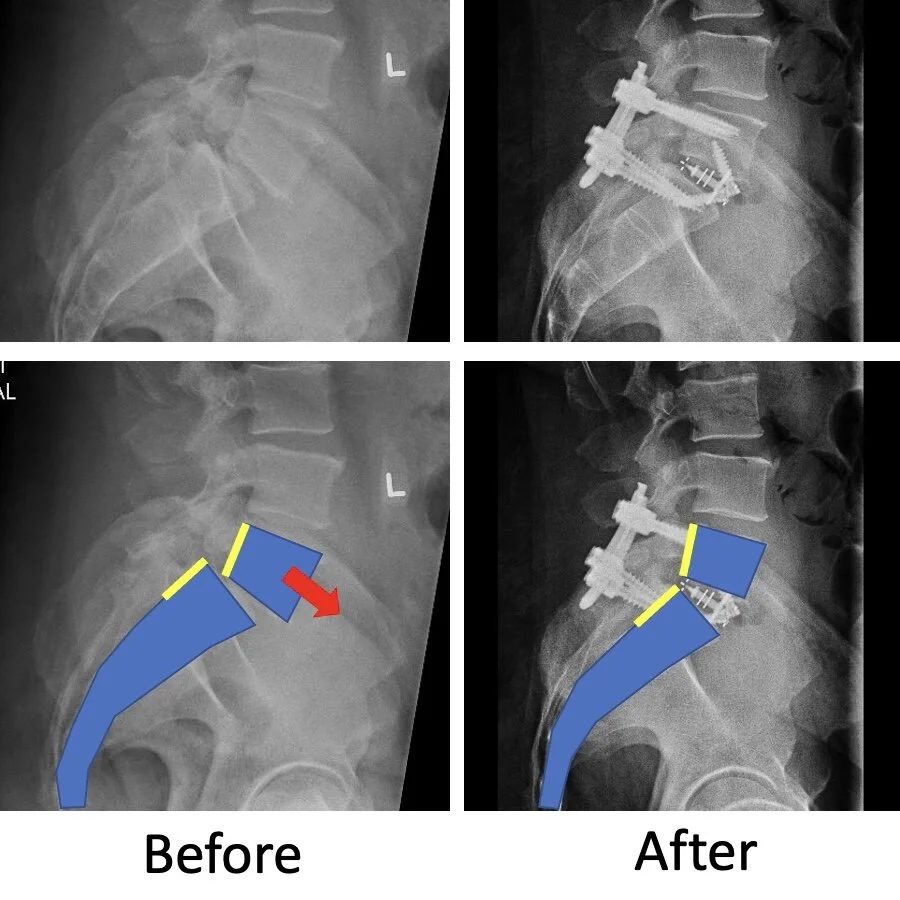
Is an ALIF the right procedure for me?
Whether an ALIF is the right procedure for you depends on your symptoms, age, medical history, and spinal and blood vessel anatomy. We will discuss these considerations during your office visit.
Should I meet with you?
If you live near Denver and have back pain or leg pain from a degenerative lumbar spine disorder, please consider meeting me in consultation to learn about your treatment options.